The Art of Immersion
click ki tetze 2026 to download
The Art of Immersion
The Parsha talks about when a man marries a woman. It says the following words three times in our Parasha. כִּֽי־יִקַּ֥ח אִ֖ישׁ אִשָּׁ֑ה The rabbis of the Midrash recorded a case study. A righteous man was married to a righteous woman. They had no children. Eventually they divorced. He remarried — to a wicked woman. And she made him wicked. She remarried — to a wicked man. And she made him righteous.
The Midrash closes with four words that have made people uncomfortable for centuries: “Ha, hakol min ha’isha”— so it all comes from the woman. (Bereishit Rabbah 17:7) Same man. Same soul. Same gifts. Change one variable, the woman he marries, and you get a different human being.
Rabbi Yonatan Eybeschutz (1690–1764) noticed that in Hebrew, the word for woman— אִשָּׁה, spelled as the Torah spells it, without the yud — has the numerical value 306. So does the word for honey, דְּבַשׁ.
א (1) + ש (300) + ה (5) = 306
ד (4) + ב (2) + ש (300) =306
The obvious reading is that it’s about sweetness. But what does that even mean? Not every woman is sweet! And even a sweet woman, is not sweet every week!
Rabbi Chaim Kanievsky offered a different understanding of what it means, that woman equals honey. The point isn’t how honey tastes. The point is what honey does to whatever falls into it. Throughout laws of Kashrut, when something forbidden falls into something permitted, it gets nullified — when it falls into sixty parts, or into a majority. But note what nullification actually is: the forbidden thing is still forbidden. It hasn’t changed. It has simply been outnumbered. It’s hiding inside a volume large enough to render it irrelevant.
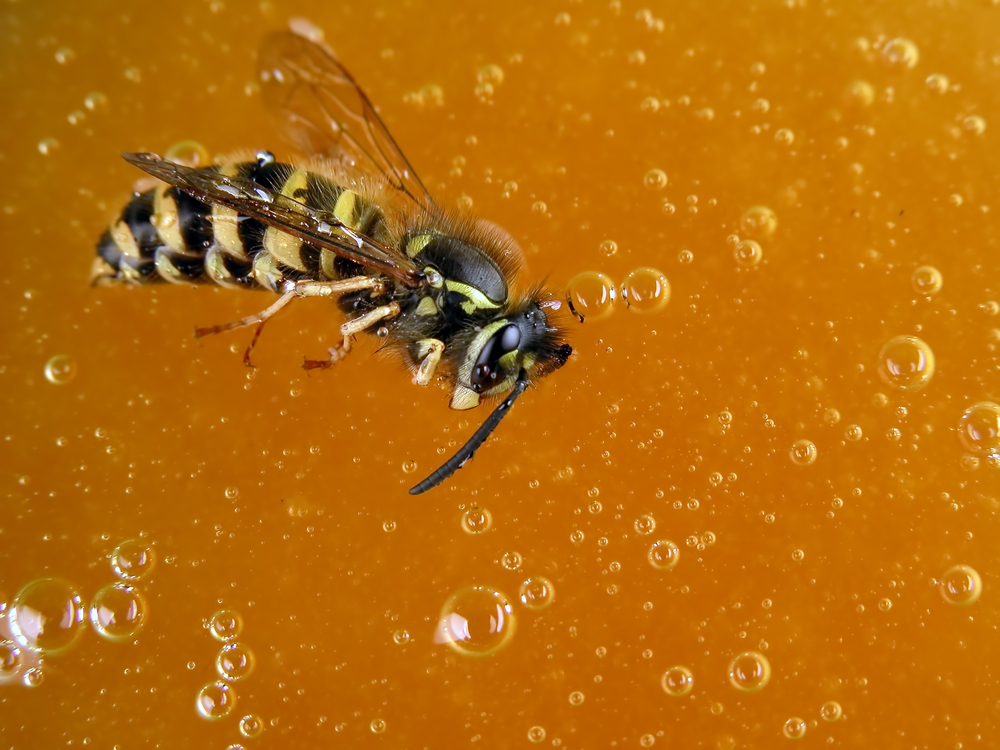
Honey is the exception. Rabbeinu Yonah and the Rosh record a striking position: something that falls into honey and remains there long enough doesn’t get outvoted. The honey converts it into honey. It emerges with a new identity. A bug in honey, is not a bug anymore. It becomes honey. (Magen Avraham, Orach Chaim 216:3)
This explains why when someone wants to do Teshuva, he should learn Torah. This is from numerous sources. Rav Huna: if a person stumbled into a sin and became liable for death at the hands of Heaven — what should he do to live? If he was used to reading one page, let him read two; one chapter, let him learn two…. Eli Hakohen’s descendants couldn’t be atoned by sacrifice, but Rabbah says it is atoned by Torah; Abaye adds acts of kindness. The Gemara then notes that these two were descendants from Eli Hakohen. Rabbah, who engaged in Torah, lived 40 years; Abaye, who did both, lived 60. Reish Lakish: whoever engages in Torah is as if he brought an olah, mincha, chatat and asham. Rava sharpens it: he needs none of them… Even chillul Hashem, which suffering doesn’t atone, finds atonement through constant toil in Torah. As it is written, G-d says, I wish, they would have abandoned Me but kept learning My Torah, for through engaging in it, the light within it would return them to the good.
Why does Torah learning have in it an unmatched power of atonement?
The Chafetz Chaim explains, that Torah learning is compared to honey. וּמְתוּקִ֥ים מִ֝דְּבַ֗שׁ וְנֹ֣פֶת צוּפִֽים and דְּבַ֤שׁ וְחָלָב֙ תַּ֣חַת לְשׁוֹנֵ֔ך. How is Torah compared to honey? Those who learn Torah, and enjoy its sweetness, transform. The biggest condition for Teshuva, is נהפך לאיש אחר, that a person changes to a new man. Judaism believes that people can change. The only way to truly change, is through enjoying Torah study, immersing in Torah study.
A woman, too, has that power of honey, that whoever connects to her will be influenced by her, transformed by her.
How is it though, that many righteous women, want to impact their family, to make them more religious, and they are not successful? They recommend classes, books, clips, and inspiration quotes, but it does not impact and they do not transform those they love for the better?
The reason for that is, those women imagine influence as ביטול, they try to nullify: enough good people and good influence around you will outvote your bad instincts. That’s nullification thinking. You’re still you, just outnumbered.
That is their mistake. The power of the woman, is like honey. Not suppression. Conversion. If a woman just keeps her values, without any lecturing, advising, comments, criticism, or speeches, and she just stays sweet, she could have the greatest transformation to those that are in her life.
We spend enormous energy on the question how do I change? — hunting for the technique, the system, the discipline.
Everything here is telling us to focus on something else. Not how do I change, not what do I do different, but who do I associate myself with? What type of environment am I sitting in? My community? My social? My work place? You can fight yourself for a decade. Or you can change what you’re immersed in and let it do to you what honey does.
I want to reveal to you something amazing though, of influence from those around us.
In 2015, researchers at University College London followed 3,722 married couples, all over fifty, and tracked something simple: who changes their habits, and when?
They identified people who smoked, never exercised, or carried too much weight. Then they watched to see if they’d change—and they looked at one variable: what was their spouse doing?
They found three kinds of husbands:
Husband One: Still smoking. Not trying.
Husband Two: Never smoked in his life. The good husband. The one who should matter most.
Husband Three: Was a smoker. Is quitting right now, alongside her.
Here’s what happened to wives in each group:
If her husband was still smoking: 8 out of 100 wives quit
If her husband never smoked at all: 17 out of 100 wives quit
If her husband was quitting right now: 50 out of 100 wives quit
Read those three numbers slowly, because the massive insight is in the gap between the second and the third. Husband Two is, on paper, the better man. Lifelong non-smoker. Nothing to fix. Husband Three has a cigarette habit he’s in the middle of breaking — he’s the worse husband by any conventional measure. But no!! The fact that the husband three is proactive in changing, that influence is better than the influence who never smoked at all! Being good is not as good as being in motion!
If you want to influence someone you love—a spouse, a child, a friend—stop forwarding them content. Stop lecturing. Stop pointing out who else is doing it. Just visibly, quietly, close enough, let them watch you grow. Not announced. Not aimed. Just there. Moving. Working on yourself. Enjoying the growth. And present enough that they’re sitting in it. That’s the honey. That’s the conversion. That’s the art of immersion. You don’t change people by fixing them. You change them by becoming the kind of person whose presence transforms everything it touches.