THE ART OF ASKING AYEKAH
click devarim 2026 to download
THE ART OF ASKING AYEKAH
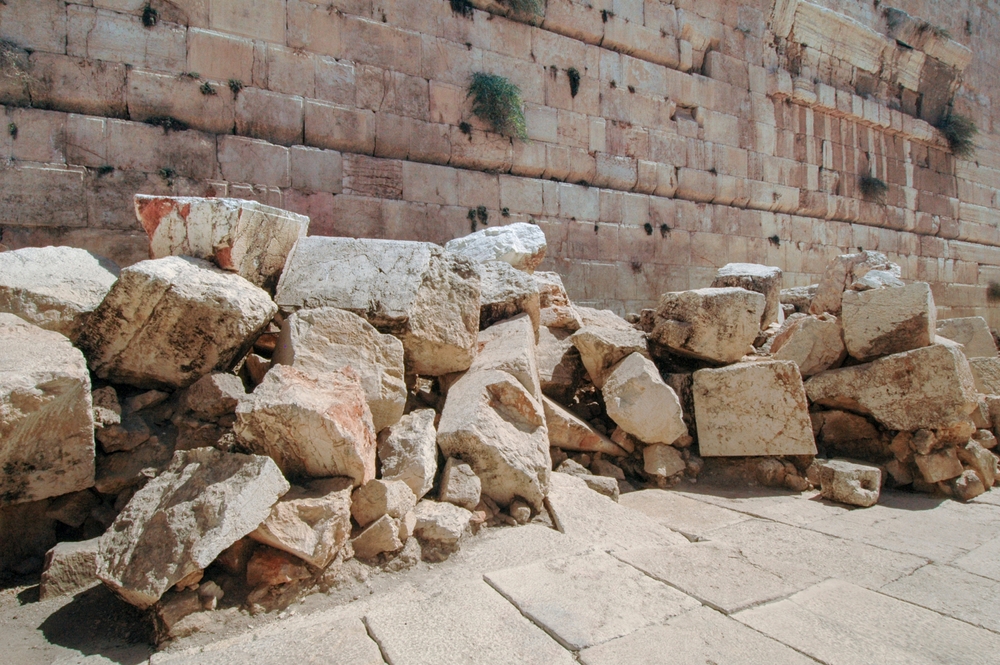
On Tisha B’Av, the darkest day of the calendar, the day both Temples burned, we omit Tachanun supplications, exactly as we do on holiday festivals (Shulchan Aruch, Orach Chaim 559:4). The reason is a verse from Eicha, the very scroll of our grief: kara alai mo’ed — “He has proclaimed a mo’ed against me” (Eicha 1:15). Tisha B’Av is a mo’ed.
How can the day of destruction be a holiday? The answer is, Mo’ed does not primarily mean “celebration”; it means “appointed meeting.” It is the same root as the Ohel Mo’ed, the Tent of Meeting where G-d’s voice met Moshe.
On every festival we arrive at the meeting carrying something. On Pesach we meet G-d with the Korban Pesach. On Shavuot we meet Him by receiving His Torah. On Sukkot we come holding the lulav and etrog. On Rosh Hashanah we meet Him by crowning Him King with the shofar and accepting His judgment; on Yom Kippur, by fasting until we resemble, for one day, the angels.
And on Tisha B’Av? We bring nothing. We carry nothing to meet Him with.
Tisha B’Av is the one mo’ed where the direction is reversed. On this day we do not go up to meet G-d — G-d comes down to meet us. We sit on the floor in the dark, holding a scroll of tears. He finds us where we are: on the ground, in pain. A parent who hears that a child is hurting does not wait for the child to make the trip. He comes. That is why there is no Tachanun. You do not say Tachanun when the King is sitting on the floor beside you.
What is the agenda of this meeting, between G-d and His People? One word: Eicha. Parshat Devarim is always read on the Shabbat before Tisha B’Av because it contains that word.
The Midrash (Eichah Rabbah 1:1) teaches that three prophets prophesied with the language of Eicha. Moshe saw Jews in their glory and cried, “Eicha esa levadi” “How can I carry you alone — your burdens, your quarrels?” (Devarim 1:12), which Rashi explains included their constant suspicions of Moshe. Yeshayahu saw them in their decline: “Eicha hayta l’zonah” — “How has the faithful city become a harlot?” (Yeshayahu 1:21), read in the haftarah of Shabbat Chazon. And Yirmiyahu saw them in their devastation: “Eicha yashva badad… hayta k’almanah” How does she sit alone… she has become like a widow” (Eicha 1:1).
But the word Eicha is older than all three prophets. After Adam eats from the Tree of Knowledge of Good and Bad, G-d calls out the first question ever asked of a human being: “Ayeka?” “Where are you?” (Bereishit 3:9). In the Torah scroll, Ayeka is spelled with the exact letters of Eicha: אַיֶּכָּה / אֵיכָה. The Midrash makes the connection: G-d brought Adam into the garden, Adam violated the command, and G-d lamented over him with “Eicha”, and later, G-d did the same lamentation with Adam’s children when they violated the covenant and were exiled from His land, He said Eicha! ( Bereishit Rabbah 19:9).
Rashi asks the obvious question about G-d’s question to Adam “Where are you?” Did G-d not know where Adam was standing?
G-d asked “Where are you?” to open a conversation — gently, in the Name of YKVK of Mercy — so that Adam would not be terrified into silence, so that Adam would have an opening to answer, to own his mistake, and to return. וַיִּקְרָ֛א יְקֹוָ֥ק אֱלֹקים אֶל־הָֽאָדָ֑ם וַיֹּ֥אמֶר ל֖וֹ אַיֶּֽכָּה Ayeka was an invitation to teshuvah. And Adam missed it. He answered the surface question: I’m here in the garden; I heard You; I was afraid; I hid.
Our Rabbis explain that the word איכה does not mean here just where are you… It was a question about direction: Adam — where are you headed? Where are you going with this? Until now, you were connected to Me. Now, you are connected to the Snake, the Evil Inclination!
The Rambam (Guide for the Perplexed 1:2) explains that before the sin, Adam’s inner world knew only the categories of true and false. Whatever drew him toward G-d was true; whatever pulled him away was simply false — not tempting, not shiny,… just false. The Nefesh HaChaim (1:6, note) adds that before the sin, evil stood entirely outside of man, embodied in the serpent; only after eating did it enter within him. In Gan Eden, before eating the fruit, the grass on the other side of the fence wasn’t greener — it was fake grass. After the fruit, envy became real, appetite became real, anger began speaking in first person, from inside. G-d was not just asking “where are you now?” He was asking, “where are you going with this?” Now that you have the Evil Inclination inside you, you are going to go further and further away from Me. (See Sanhedrin 38b) And because Adam never turned, the question was left open — and it has echoed through history as Eicha ever since. Until a person does teshuvah, until Mashiach comes, G-d’s Ayekah, “Where are you going?” keeps collapsing into the prophets’ Eicha, “How did you fall?”
These three Eicha questions, the Eicha: “How have you become so low”, the Ayeka that Adam understood: “Where are you standing”, and the Ayeka of G-d, “Which direction you are going”, are three ascending levels of self-awareness and insight that are crucial for growth.
The first question is “How did you get here?” This is the question that traces the choices, and patterns that produced your current situation, good or bad. It has real value — you cannot repeat or stop what you never noticed. But this question can also become a trap. People who dig into themselves with “why”-style questions “Why did this happen to me? Why am I like this?” often end up spiraling into self-blame and negative mood.
The second question is “Where are you now?” the plain meaning of Ayeka. An honest, present-tense inventory: What is my actual status? — in my marriage, my health, my learning, my middot.
The third and deepest question is “Where are you going?” — the question beneath Ayeka, the one Adam never answered. What next, what now, what is the direction.
The art of life coaching is the art of asking questions. After much research and study, comparing problem-focused coaching questions (analyzing how the problem arose) with solution-focused, future-directed questions, here was the results: Both helped — but the future-directed questions significantly increased positive emotion, concrete action steps, and even participants’ understanding of the problem itself, outperforming problem-analysis on nearly every measure. So “how we got here”, “Where are you at”, don’t come close to the question, “Where are we going with everything we are dealing with”. You understand your pit better by planning your climb than by studying your fall. A person who never asks “Where am I going?” will spend a lifetime asking “How did I get here?” That is the whole difference between the voice of Ayeka and the wail of Eicha.
Why does Judaism prescribe three weeks of mourning, nine days, a floor, and kinot? Because in Torah, mourning for Jerusalem is not dwelling on the past. Mourning is a direction, a goal in forward motion, and a declaration of a destination. The Talmud promises: “Whoever mourns for Jerusalem merits and sees her joy” (Taanit 30b). When we sit on the floor, we are answering G-d’s Ayeka: We are not at home in exile. We are going back! The kinot are the Jewish people’s way of aiming back to Jerusalem.
This explains one of the strangest customs of the day. Halfway through Tisha B’Av the mourning begins to lift: at midday we rise from the floor onto chairs, and by Minchah we put on tefillin and add the prayer of Nachem, infusing consolation and hope. Historically this makes no sense. The Talmud (Taanit 29a) records that the fire was set toward evening of the ninth and the Heichal burned primarily through the tenth of Av. Rabbi Yochanan said that had he lived in that generation, he would have established the fast on the tenth. Just as the flames peaked, we stand up from mourning?!
The answer is the tradition that Mashiach is born on Tisha B’Av. A child named Menachem — “the Comforter” — is born on the very day the Temple was destroyed. The moment G-d meets us at our lowest is the moment redemption is conceived. Positive transformation begins, for many people, precisely at the point of rupture. The afternoon of the Hurban is the birthday of the Comforter, the Mashiach.
In every single prayer of the year, we pray “v’techezena eineinu” — “may our eyes behold Your return to Zion.” Why the eyes? Why do we pray to see it, if the main goal is just that it should happen? Because seeing it means you merited to see it. Lot’s wife looked back at Sedom and became a pillar of salt; Rashi explains she had sinned with salt — going to the neighbors to “borrow salt” in order to expose her husband’s guests, that there was not enough salt for the family alone that night. She was no better than the city, who did not allow guests, so she had no right to watch its downfall. Those who never mourned Jerusalem, never longed for her, will not merit to have their eyes see the rebuilding of it. The mourning over Jerusalem, is the only way to build Jerusalem.
Ever noticed how even the names of these months are arrows pointing forward? Av, stands for Elul Ba, “Elul is coming”; Tammuz for Zman Teshuvah Memashmesh U’ba, “the season of Teshuva is slowly approaching.” In the Syrian community, on Tisha B’Av day, the moment the prayers of Tisha B’Av conclude, the melodies of the Selichot begin to be sung, as we go from the floor of Av straight toward the shofar of Tishrei, a shofar so certain that, the Talmud says, we arrange the blasts “to confuse the Satan”, who trembles that this time it is the shofar of Mashiach. On Rosh Hashanah itself, before that shofar, Sephardic communities sing Eit Sha’arei Ratzon — the piyut of the Akeidah — whose final stanza is where all of this is going: לִבְרִיתְךָ שׁוֹכֵן זְבוּל וּשְׁבֻעָה For Your covenant, O Dweller on high זָכְרָה לְעֵדָה סוֹעֲרָה וּנְגוּעָה remember the storm-tossed, stricken congregation, וּשְׁמַע תְּקִיעָה תּוֹקְעָה וּתְרוּעָה hear the tekiah sounded, and the teruah, וֶאֱמֹר לְצִיּוֹן בָּא זְמַן הַיְשׁוּעָה and say to Zion: the time of salvation has come יִנּוֹן וְאֵלִיָּה אֲנִי שׁוֹלֵחַ Yinon (Mashiach) and Eliyah (who announces Mashiach’s coming) I am sending.
G-d keeps His appointment, His Moed. He comes down to the floor, sits beside us in the dark, and asks the question He has been asking since the Garden of Eden — What direction are you going in? Jerusalem? Elul? Teshuva? Crowning G-d with Shofar? Mashiach?